- OLIVE OIL

Organic extra virgin olive oil of the Koroneiki variety
- VARIOUS PRODUCTS


But Your Neighbour Sprays Anyway…

Things We Often Hear – Part 1
As organic farmers, we often hear questions, doubts and sometimes surprising claims about our farming practices and our products. Through this new series of articles, we’d like to share some of them and explain how we see things.
Let’s start with one of the most common:
“There are no truly organic products. If your neighbour sprays pesticides, your olives are no different from conventional ones.”
At first, it sounds reasonable. After all, the wind doesn’t know where one field ends and another begins.
Yes, pesticides can drift from neighbouring fields. Organic farming doesn’t create an invisible protective bubble around our olive trees.
But that doesn’t mean organic and conventional products are the same.
Think of it this way: if someone smokes next to you, you might breathe in some of their smoke. But that doesn’t make it the same as smoking yourself every day.
Something similar happens in farming. Accidental exposure is not the same as regularly applying pesticides directly to trees and soil.
And this difference matters for the products themselves. Scientific studies generally find fewer pesticide residues in organic products than in conventional ones. Organic doesn’t necessarily mean zero residues, but it does mean a genuinely different way of producing food.
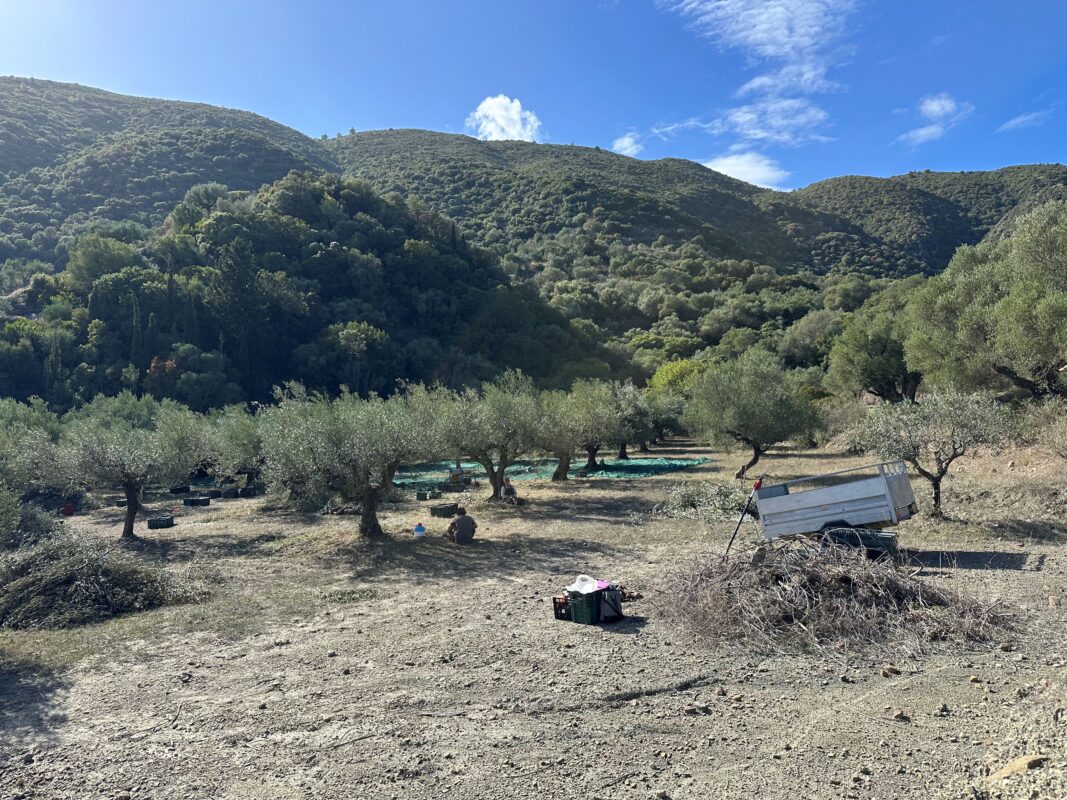
For us, however, organic farming is about more than just the final product.
It’s also about protecting the soil, the plants and the animals around our olive trees. Our goal isn’t just a good and profitable harvest. This is where we and our families live and work. We want a better, healthier environment for ourselves and our children.
At Apo Kardias, we cannot control what every neighbouring farmer does.
But we can decide what we do on our own land.
And every field where synthetic pesticides are not used makes a small but meaningful difference.
At least to us.
